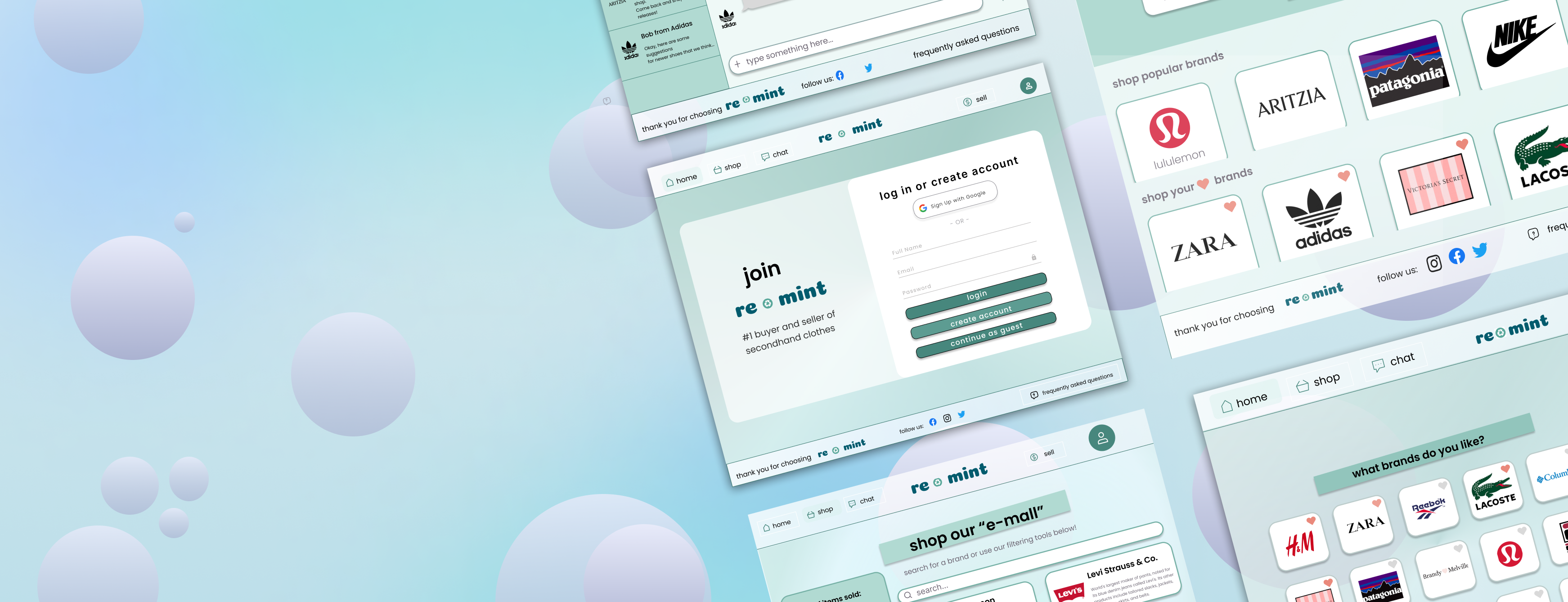
Alongside a small team , I helped design an interactive interface based on the problem that the emerging startup has. Re-mint was a startup that we worked with, an official secondhand marketplace for fashion brands. We went through the full process of mocking up a solution to the startup’s concept: (1) sketching ideas of the interface, (2) creating an interactive, high-fidelity prototype, (3) conducting user testing on a final, revised prototype, and (4) contacting the start-up.
Re-mint lets fashion brands set up official secondhand marketplaces so their customers can buy and sell directly with each other. The startup help brands monetize their resale market. Re-mint offers revenue share on transaction fees and uses the transaction data to drive new sales. How the interface of the startup will be a space for all brands, sellers, and customers to interact with one another is a point of difference that we haven’t seen from other companies and intrigued us to concoct an interface for their particular needs.
Our goal is to curate a mockup that solves these 3 problems, providing all types of users a common space to navigate the different features of the website easily and efficiently.
Because Re-mint website will be the middle-ground for all interactions between buyers, sellers, and brands, we decided to design a desktop interface. It will be much easier for buyers and brands to conduct their business and work transactions in a desktop screen resolution. In addition, adapting our interface as a desktop version will provide consumers the comfort to navigate the website with much more product choices and features displayed due to the larger screen size. Users who are interested in fashion, second-hand clothing, ustainability, and prefer the structure of an online shopping app would be greatly impacted by our interface. These users would most likely be in their teens and 20s, and be either consumer or buyer users. We expect a lot of overlap between users of Patagonia, Poshmark, and Depop. However, our app is intuitive for all ages.
Each group member mocked up rough, different possible designs for Re-mint interface. We wanted to let the creativity flow, and come up with a final set of wireframes that aligned with the goals of Re-mint.
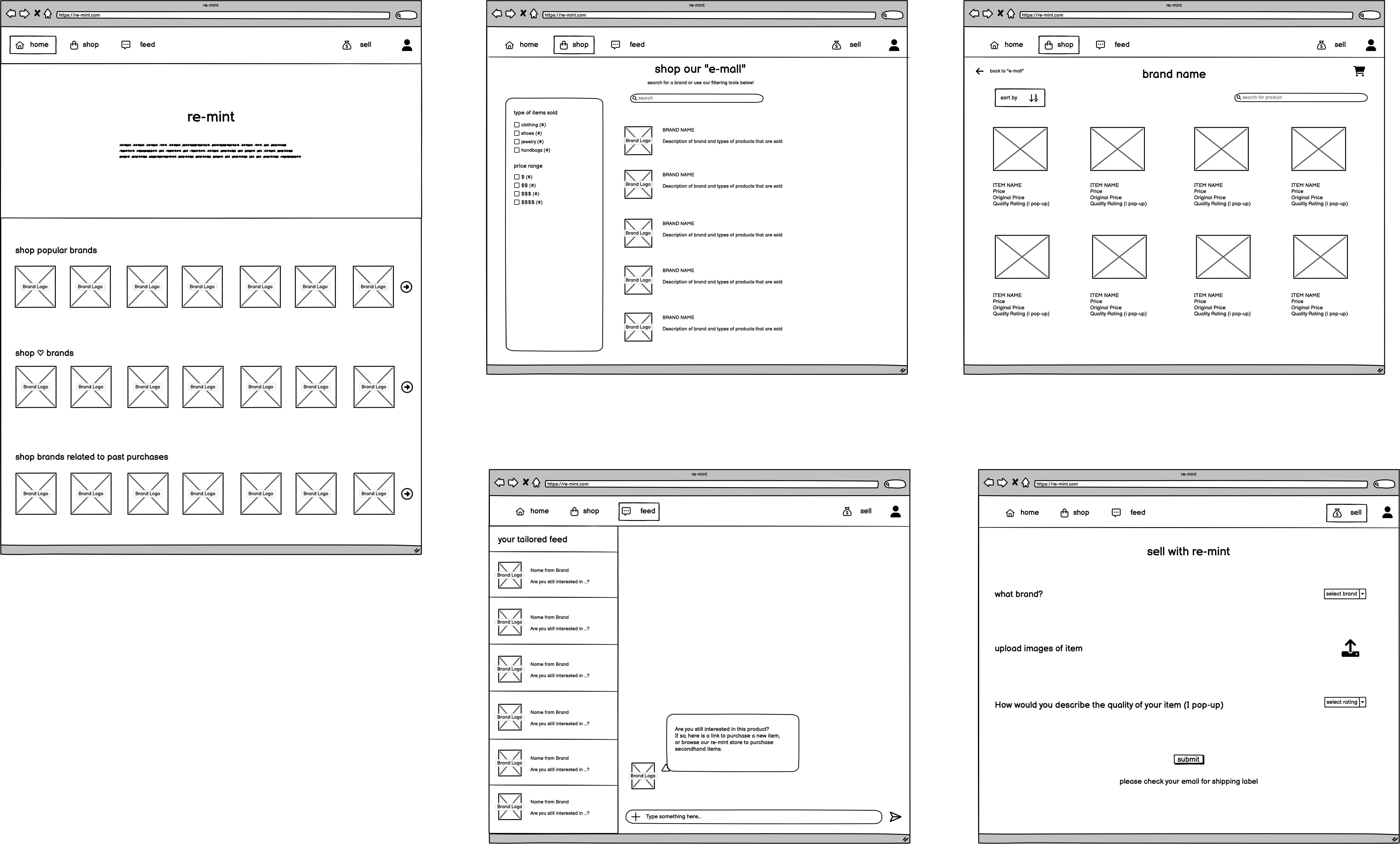

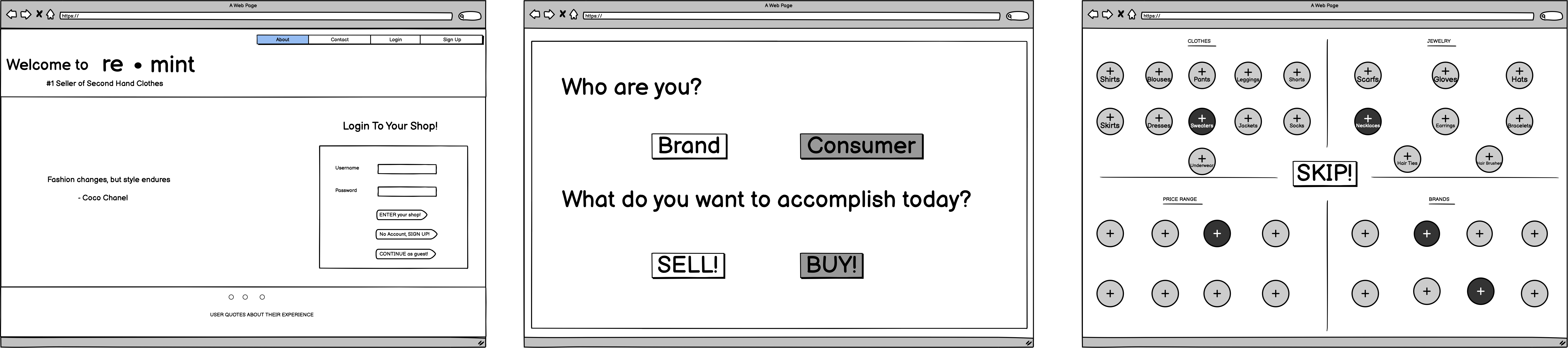
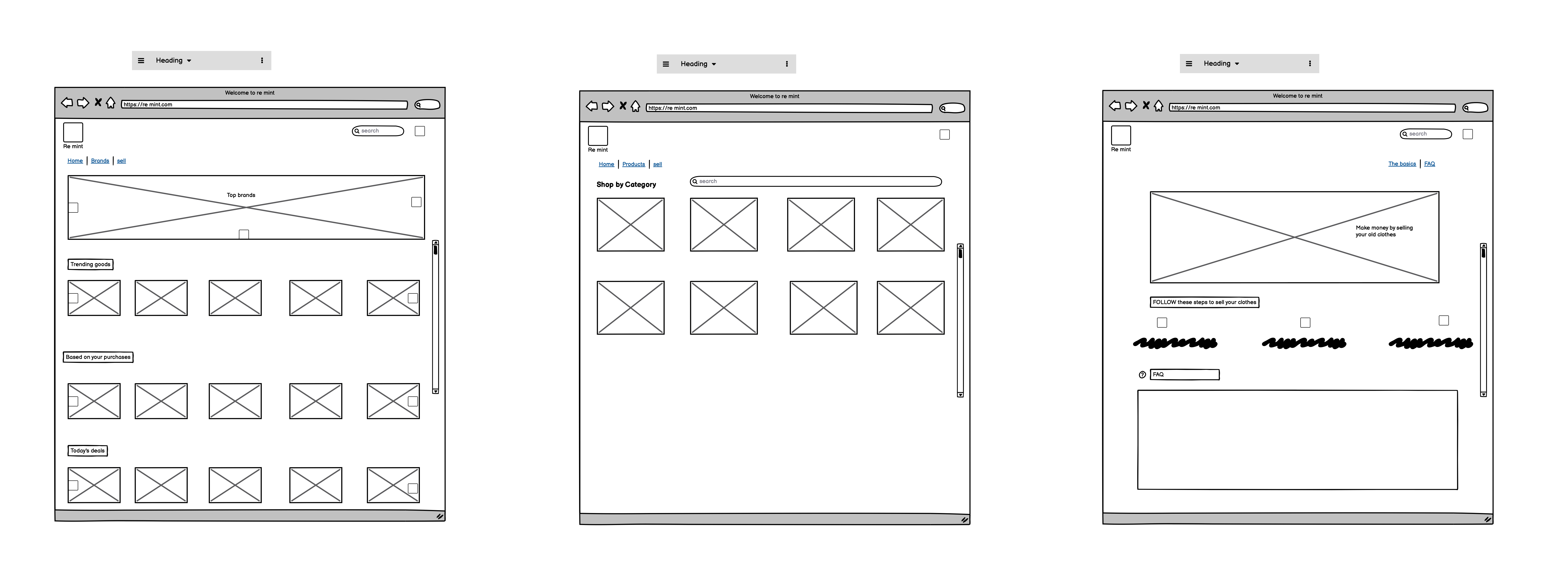
After iterations of conversations and feedback, a collective set of 10 wireframes was mocked up. Through our wireframes, the features of our app ensure that brands, sellers, and customers have a presence in the resale market.
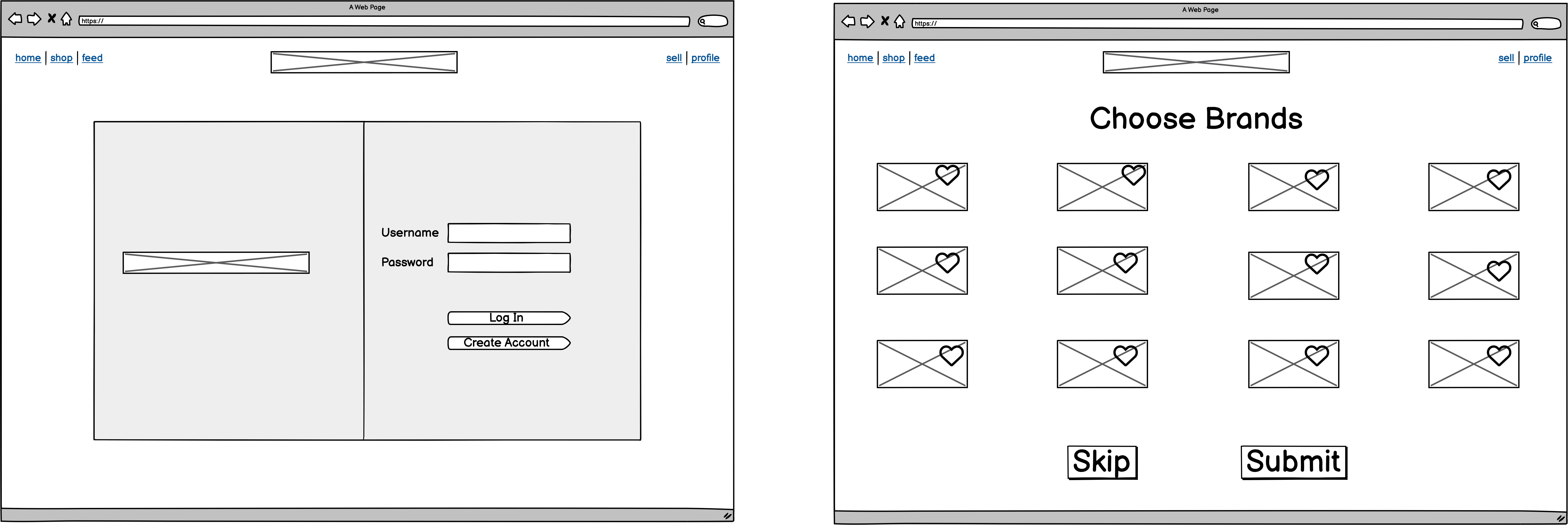
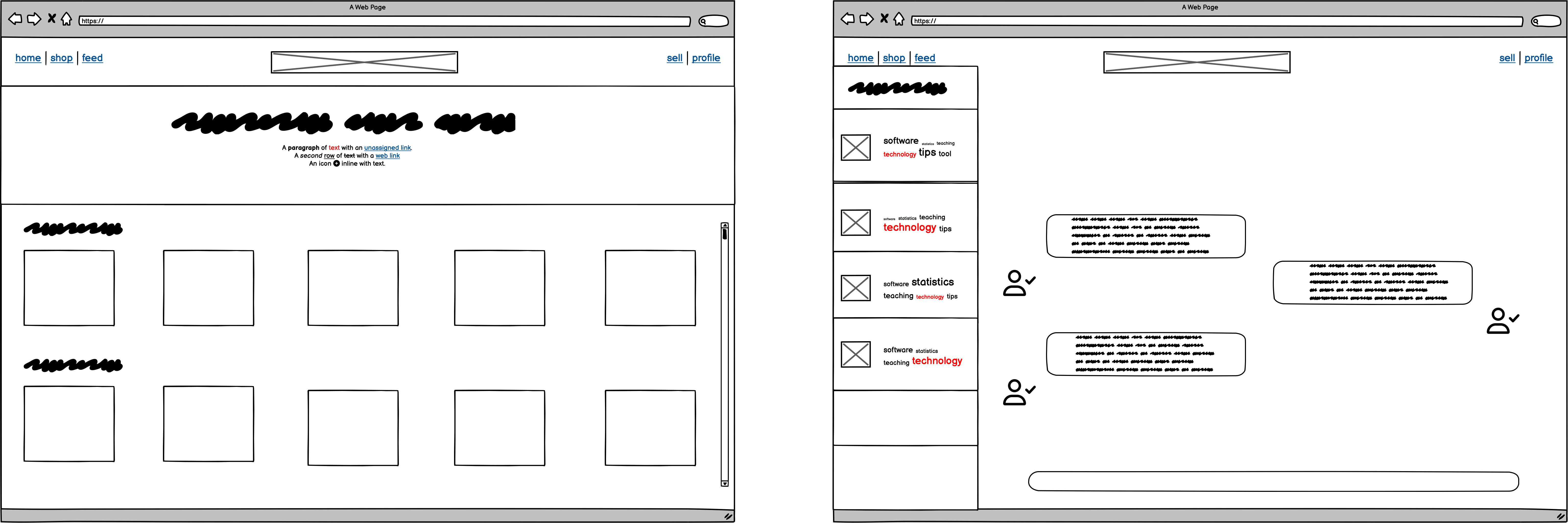
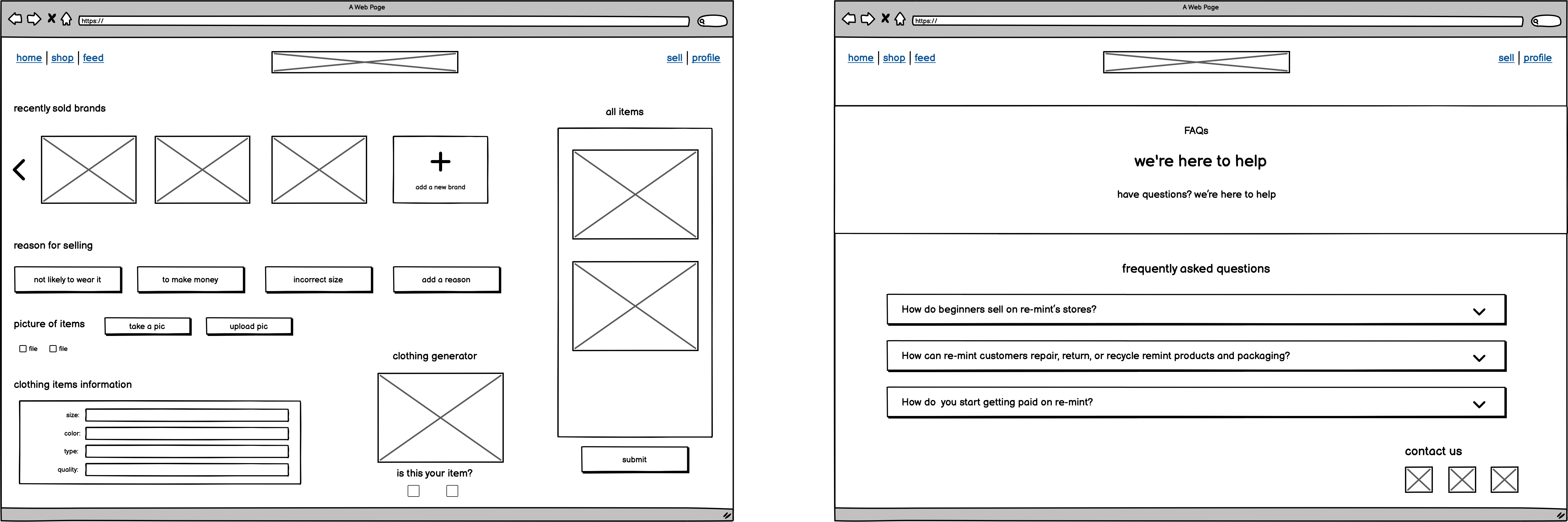
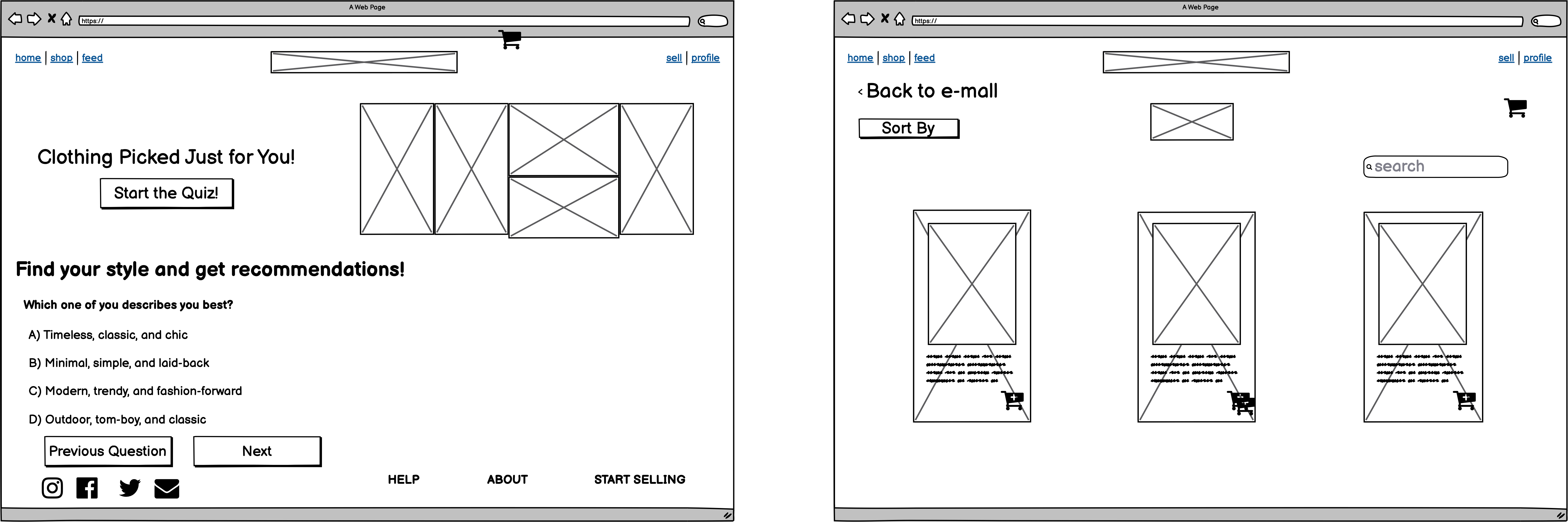
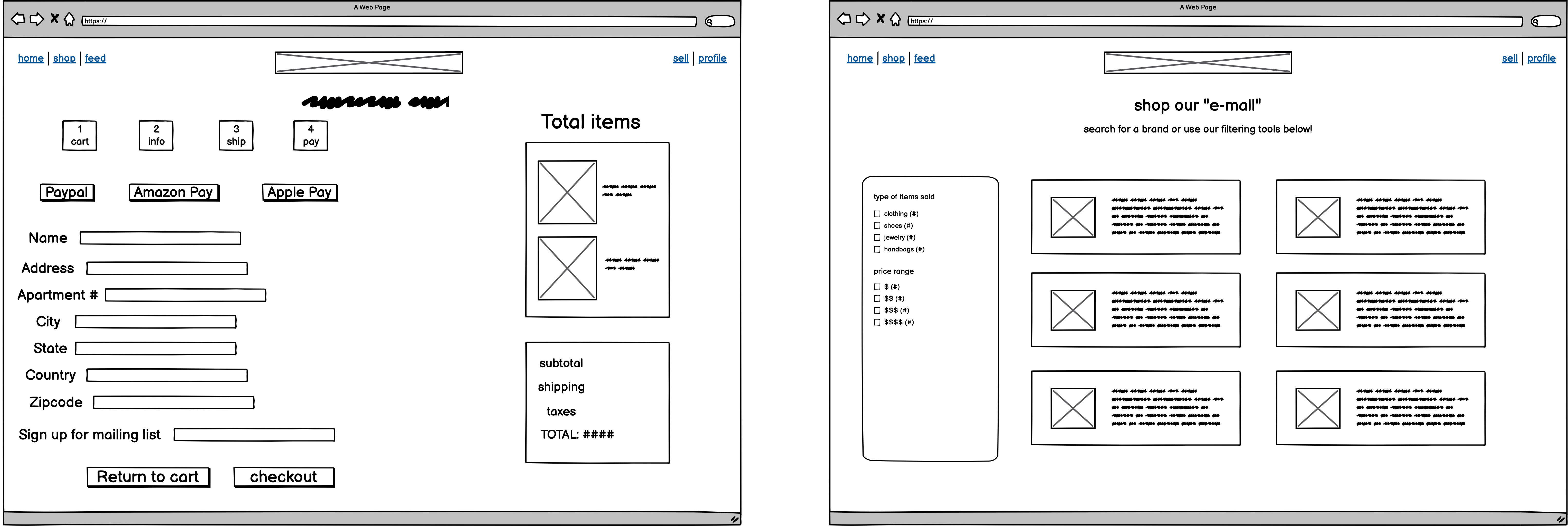
After mocking up low fidelity prototypes, we shifted to mocking up high-fidelity prototypes in Figma. The prototype went through a few iterations of trial and error and critiques. Below, there will be the first version of my group’s high-fidelity prototypes.
My teammates and I attended a studio lab where other students critiqued our designs. Below is feedback from our peers that we incorporated into our prototype. Click the prototype to explore our design choices and features of the website!
Having test users try out an interface is an important part of testing and a valuable source of feedback. Thus, my teammates and I conducted our own usability test through a remote user testing service, using our newly created interactive high-fidelity prototype.
Users were provided with instructions and questions to guide them through the process of navigating our interactive mockup.
Re-mint is a secondhand buying and selling website, and you are a new customer doing both of these tasks. Our outlined task for you is to create a new account and heart different favorite brands (hover only for now due to Figma limitations), and then submit to begin shopping. We then want you to shop specifically for Lululemon clothes and checkout, and then finally sell your old Zara clothes. Currently, we are in an interactive mockup stage, and we are designing in Figma with limited functionality, so please assume that information is pre-filled for you and that some things are only hoverable (limited amount of clicks per page). However, please attempt to use our website as realistically as possible, click through the different pages, and think aloud. Thank you!
Below are the videos of 3 users that completed this task from UserTesting.com. Click on the icons to watch the videos !


After watching each user browse our prototype, we implemented the changes that they suggested to us!
At the end of the project, my team connected with Re-mint and sent an email with our work. As of now, we are currently waiting fot their response!
If we had additional time for the project, these would be the other features we would have amended into Re-mint interface: